Plastic Free July is a useful prompt for businesses to look at the packaging they use, but reducing waste is not simply about replacing plastic with paper.
A paper alternative can still be wasteful if you need more of it. Removing protective packaging can create a bigger problem if products arrive damaged. Even recyclable packaging is inefficient if it is badly sized or difficult for customers to separate.
The most useful question is not, “How do we remove all plastic?” It is, “Where are we using more packaging than we need?”
Review what you are actually using
Start with a normal week of orders and look at the packaging leaving your packing area.
Focus on:
Boxes and postal bags
Tape
Bubble wrap and protective materials
Paper or plastic void fill
Labels and inserts
Pallet wrap and strapping
Pay particular attention to your most common orders. A small improvement to packaging used every day will usually have more impact than redesigning something used occasionally.
Look for obvious patterns. Are staff cutting boxes down? Adding large amounts of void fill? Double-boxing products? Using different packaging for the same item?
These are often signs that your current packaging range is not working as well as it could.
At TEC Packaging, we offer a free packaging audit.
Use better-sized packaging
Oversized boxes use more material, need more void fill and take up additional space in storage and transport.
That does not mean you need a different box for every product. Too many sizes can make stock control and packing more complicated.
Instead, review the products and order combinations you send most often. You may find that one shallower box, an adjustable-depth box or a better-sized postal bag could cover several common orders.
For products sent in higher volumes, bespoke packaging may also be worthwhile. A box or insert designed around the product can reduce excess material and make packing quicker and more consistent.
For more information, you can read our blog on how to choose the right packaging for your business

Check whether every layer is necessary
Packaging often builds up over time.
Extra bubble wrap may have been added after one damaged delivery. More tape may have become standard because a parcel once opened in transit. Months later, those extra materials are still being used on every order.
Take apart a typical parcel and look at what each layer is doing.
Does it stop movement? Prevent scratches? Protect against impact or moisture? Strengthen the outer box?
If a material has a clear purpose, it may need to stay. If it has been added out of habit, it may be an opportunity to reduce waste.
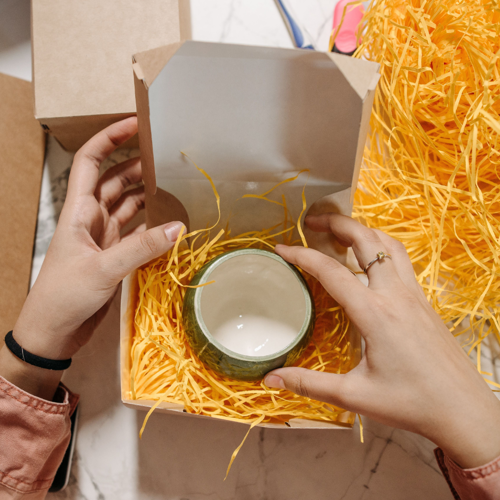
Use void fill more effectively
A box full of void fill is often a sign that the box is too large.
Simply using less fill is not always the answer, as products still need to be held securely. A better-sized box, divider, corrugated insert or paper cushioning may provide better protection using less material.
The right choice depends on the product. A light, non-fragile item may only need a smaller box. A heavier or breakable product may need a stronger insert that stops it moving.
Void fill should protect the product, not compensate for unsuitable outer packaging.
For more information read our blog: How to package fragile items
Look at tape use
Tape is easy to overlook because it is relatively inexpensive, but unnecessary strips quickly add up across regular dispatches.
Excess tape can be caused by weak boxes, poor-quality tape, awkward dispensers or inconsistent packing methods.
Agreeing a simple sealing method and using the right tape for the box can reduce waste without risking parcels opening in transit.
The aim is not to use the least tape possible. It is to use the right amount once.
Do not reduce protection at the expense of the product
Packaging waste needs to be considered alongside product damage.
A damaged order can mean a wasted product, replacement packaging, another delivery, a return journey and extra staff time.
Before removing protective materials, check your damage and return data. Speak to warehouse and customer service teams, as they may know which products regularly cause problems.
Test packaging changes using the actual product and realistic handling conditions. Reducing one layer is not progress if the result is more damaged goods.
Review packaging from suppliers
Waste does not only come from outbound orders.
Look at the packaging arriving from suppliers. Are small items being sent in large boxes? Are products individually wrapped unnecessarily? Could deliveries be consolidated?
For regular orders, ask suppliers whether they can reduce excess packaging, send products in bulk or use returnable transit packaging.
Clean boxes, paper fill and dividers from incoming deliveries may also be suitable for reuse, provided they are still strong, clean and appropriate for the product.
Make disposal simpler for customers
Packaging may be technically recyclable but still difficult for customers to sort.
Where possible, avoid combining too many materials. Use components that separate easily and give clear disposal instructions.
Be careful with broad terms such as “eco-friendly”, “biodegradable” or “compostable”. These do not always tell customers what to do with the packaging, and disposal options can vary between local authorities.
Simple packaging that customers can understand is more likely to be recycled correctly.
Involve the packing team
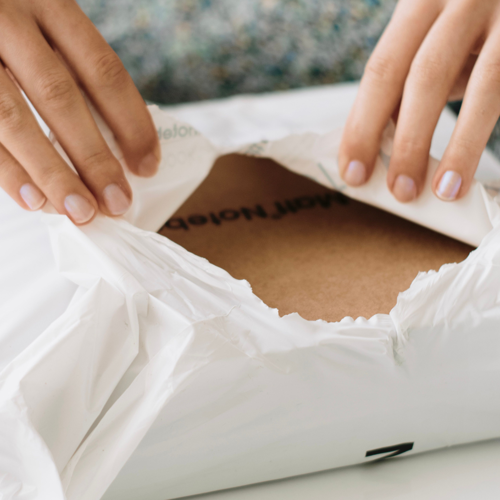
The people packing orders every day will usually spot waste first.
They know which boxes are awkward, where too much void fill is being used, why extra tape is added and which products regularly need repacking.
Ask them to test new materials before changing your packaging across the business.
A product may look more sustainable on paper but slow down packing, take up more storage space or perform badly with existing equipment. A small trial can reveal these issues before a large order is placed.
Measure the result
Avoid vague goals such as “use greener packaging”. Choose measures connected to the way your business works.
You could track:
Packaging used per order
Amount of void fill purchased
Number of box sizes held
Tape use
Parcel weight
Product damage rates
Returns caused by damage
Time taken to pack common orders
Record a starting point before making changes. This will help you see whether the new approach is genuinely reducing waste or simply moving the problem elsewhere.
Use Plastic Free July as a starting point
Plastic Free July does not need to mean removing every plastic product immediately.
It could be a good time to test paper tape on suitable parcels, reduce plastic void fill, review pallet wrap use or ask suppliers to remove unnecessary wrapping.
Plastic can still have a role where it protects products effectively, prevents contamination or reduces damage. The aim should be to remove unnecessary materials and choose alternatives where they work properly.
Small changes can make a real difference
Reducing packaging waste is usually about improving the way products are packed rather than finding one perfect material.
A better-sized box, one less unnecessary layer or a more consistent packing method can reduce waste on every order.
TEC Packaging helps businesses across Plymouth, Devon, Cornwall and the wider South West find practical packaging solutions that reduce waste without compromising product protection.
Speak to the TEC Packaging team if you need help reviewing your current packaging or finding a more suitable option.